Showing posts with label book. Show all posts

Monday, 5 May 2014

APA: Atwood, Poulin, Abbott

The effects of senioritis are getting so strong... even with IB exams upon me, I can't be bothered to feel stressed... or to study, really. Hence spending the day before IB HL English Paper 2 on this blog entry. Procrastination at its finest (Y)

*note to self: wouldn't it be funny if at the end of the month I fail all my exams and come back to read this blog post... oh the irony

Oh, you noticed the title, did you? Well, reading in April's been slow but steady. I read from three new authors I hadn't tried before, which is always exciting. It was a lucky coincidence that their names made the fun acronym APA... which doesn't at all immediately bring to mind the time-consuming citation style we are forced to employ in all those papers (MLA > APA all day every day. Footnotes? Ain't nobody got time for that!)

Anyways, on with the mini-reviews!

The Edible Woman, by Margaret Atwood

Summary (from Goodreads)

Ever since her engagement, the strangest thing has been happening to Marian McAlpin: she can't eat. First meat. Then eggs, vegetables, cake, pumpkin seeds--everything! Worse yet, she has the crazy feeling that she's being eaten. Marian ought to feel consumed with passion, but she really just feels...consumed. A brilliant and powerful work rich in irony and metaphor, The Edible Woman is an unforgettable masterpiece by a true master of contemporary literary fiction.

My take

First of all... whoo Canadian author! I've heard of Margaret Atwood, but never read any of her stuff up until now. I think Edible Woman was her first book (1969... I know that's not old compared to some other works, but seriously anything that doesn't start with 199- seems ancient to me).

When I first read it, I enjoyed the literal version of the story. This is one of those books where as I read through, I could understand that there was huge symbolism behind the whole thing, but never really came to fully appreciate the underlying message until I read some literary criticism after finishing the book.

And please. Ainsley? Don't we all know some Ainsley's? I know Atwood later developed into a much more vocal feminist, but here, I like the touch of society reigning her in.

Finally, the ending. So open. LOVED IT. THANK YOU FOR ENDING IT THAT WAY, MARGARET ATWOOD. WE DON'T ALWAYS NEED CLOSURE AND YOU REALIZED THAT. MWAH KISSES TO YOU.

★★★★☆

Les Grandes Marées, by Jacques Poulin

Summary (from Goodreads)

Peacefully employed on an uninhabited island, a translator of comic strips (codename Teddy Bear) lives in the company of his dictionaries, his marauding cat, Matousalem, and his tennis ball machine (the Prince). Convinced that the translator's happiness is in jeopardy, his boss helicopters in a few solitude-seeking companions-the beautiful and elusive Marie with her flirtatious cat Moustache; the seductive nudist, Featherhead; Professor Moccasin, the half-deaf comic strip scholar; the moody and contradictory Author; the Ordinary Man; and the Organizer, sent to "sensitize the population." As the spring tides drag ocean debris onto the shore, Teddy Bear and his companions seek out their own solitudes in this hilarious philosophical fable.

My take

This was an exercise in perseverence. If I didn't have to do my French summative on this book, I honestly don't think I would have continued it. That being said, it was nice to appreciate the grasping-at-meaning feel this book often-times gave. I didn't love it, but I didn't hate it either.

(In case the title didn't give it away, yes it is a French book. The translated English version is called Spring Tides.)

★★★☆☆

Adrenaline, by Jeff Abbott

Summary (from Goodreads)

"If you knew this was our final day together, what would you say to me?"
“Anything but good-bye. I can’t ever say good-bye to you.”


Sam Capra is living the life of his dreams.

He’s a brilliant young CIA agent, stationed in London. His wife Lucy is seven months pregnant with their first child. They have a wonderful home, and are deeply in love.

They have everything they could hope for…until they lose it all in one horrifying moment.

On a bright, sunny day, Sam receives a call from Lucy while he’s at work. She tells him to leave the building immediately. He does…just before it explodes, killing everyone inside. Lucy vanishes, and Sam wakes up in a prison cell. As the lone survivor of the attack, he is branded by the CIA as a murderer and a traitor.

Escaping from the agency, Sam launches into a desperate hunt to save his kidnapped wife and child, and to reveal the unknown enemy who has set him up and stolen his family. But the destruction of Sam’s life was only step one in an extraordinary plot—and now Sam must become a new kind of hero.

My take

These spy/thriller novels are really growing on me. I'm finding that I enjoy action much more than romance nowadays. Make no mistake, emotions in books are always necessary, but sometimes plain old badassery makes a novel so much more compelling. I didn't even mind that most necessary romantic elements were missing... because this is just what I said. BAD. ASS.

I don't think I'll be reading the sequel though. I like the place this book ends as, and am a little afraid that the next one will turn my world upside down.

★★★★☆

Friday, 2 August 2013

A Not So Impressive Zombie Book

Genre: Horror
Title: Zom-B
Author: Darren Shan

Rating: 1.5/3
Justification: This was far from satisfying. I know this is only the first book of an entire series, but after finishing, I'm feeling more a part of an advertising ploy than anything else.

Plotline (from Goodreads):

Zom-B is a radical new series about a zombie apocalypse, told in the first person by one of its victims. The series combines classic Shan action with a fiendishly twisting plot and hard-hitting and thought-provoking moral questions dealing with racism, abuse of power and more. This is challenging material, which will captivate existing Shan fans and bring in many new ones. As Darren says, "It's a big, sprawling, vicious tale...a grisly piece of escapism, and a barbed look at the world in which we live. Each book in the series is short, fast-paced and bloody. A high body-count is guaranteed!"


Good. Ness. Gra. Cious. I don't even know how to begin. (So I began with that. Congratulate me on my brilliance, please.)

This book caught my eye in the library because of a few things.


They say "don't judge a book by its cover", but I always end up doing it anyways. Usually it works, but this time it definitely didn't.

Ok, I'm going to stop hating on this book for a bit - just long enough to explain why I should continue hating on it though.

At the beginning, I actually found this book pretty interesting. The storyline was nice, and Mr. Shan had a good style of storytelling. There wasn't much zombie content as of yet, but I figured, it was only a matter of time, right?

To take the words from an Internet chatroom:


The irrelevance dragged on and on for the entire book. When I finished, I felt like I had read a "Coming Soon" preview instead of an actual book. Looking at the $9.99 sticker, the book felt considerably cheaper in my hands.

Sorry if I'm not making much sense right now. It's really hard to properly complain without giving away some spoiling details. For those truly fearless (or those who have decided they will never in their life read this book), come to the SpoilerAlert section, where hopefully I become more coherent.

Before anything else, I'm going to iterate what I was talking about in the My take section.

The title of this book is Zom-B. The book jacket promises zombie action. So why. In the world. Does nothing with zombies happen until more than halfway through the book?!

Why am I so good at colouring. Someone give me a prize for this beauty right here.

Also, did anyone realize that B was a girl before her dad saved her? I couldn't tell if that was a clever ploy by the author or just me being stupid. I was contemplating going back through the book and seeing if he called her Becky or used the words "she" or "her" anywhere else, but then I realized I didn't really care enough to find out.

That basically sums up my entire feelings about the book, actually. I really don't care enough.


This picture is here for no reason. I just like drawing almost-stickmen.

Saturday, 23 February 2013

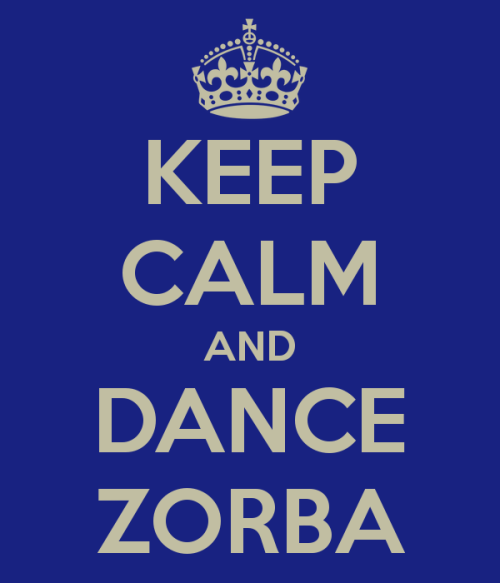
Book Review: Zorba the Greek

Genre: Novel: work in translation
Title: Zorba the Greek
Author: Nikos Kazantzakis
Rating: 2/3


Plotline (from Goodreads):

A scholar only dedicated to philosophically questioning life, the narrator is disturbed when his good friend goes off to fight for his countrymen while calling him a bookworm, so he decides to move to Crete and play the capitalist to demonstrate to himself and his good friend that he can be more than a pure scholar. On his way there he meets Zorba, a man full of stories and life adventures, and he hires him. The book is the story of the months they spend on Crete, trying to find their fortune by exploiting a lignite mine.

My take:


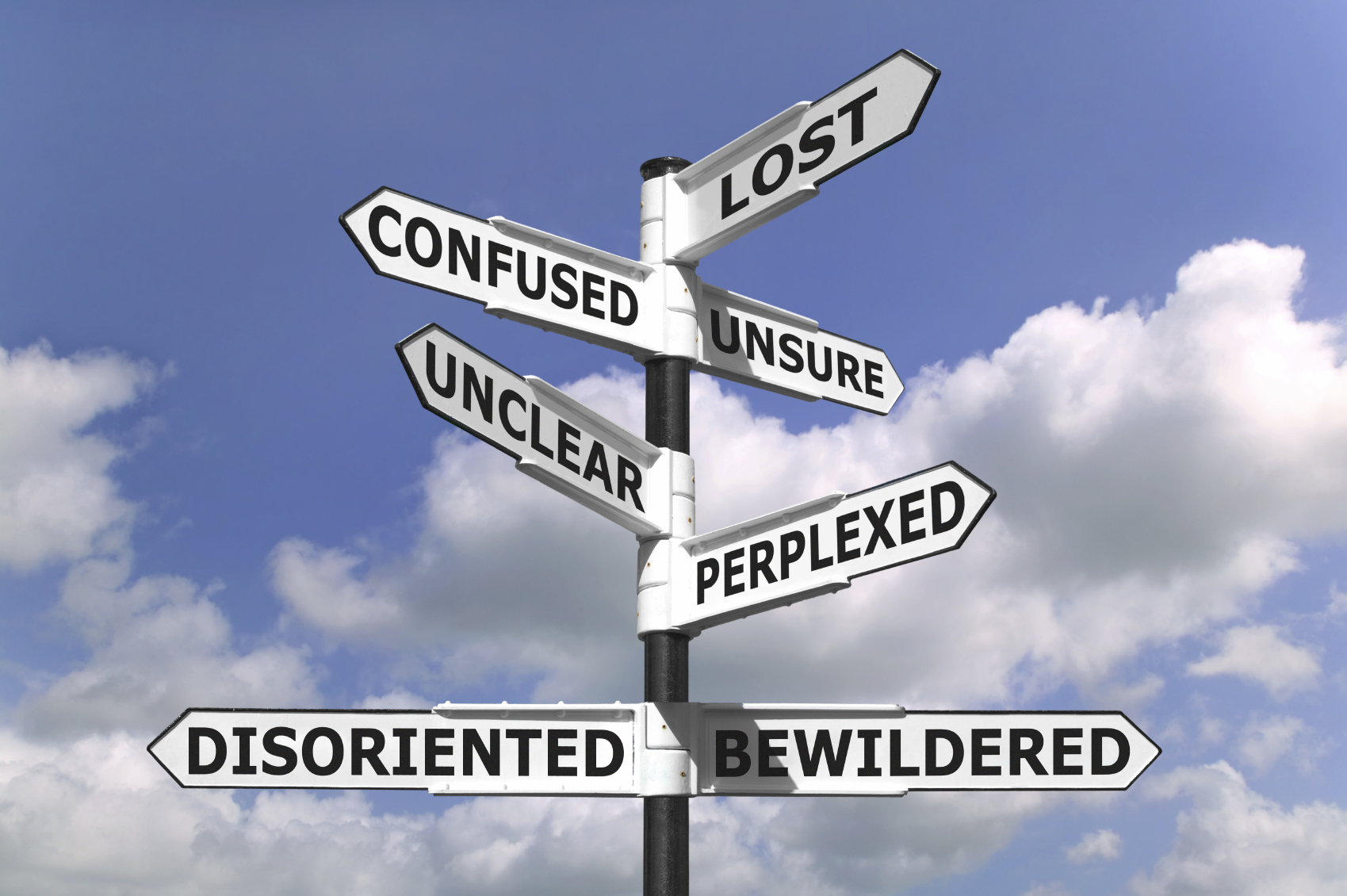
I spent quite a while staring at this blank post, trying to figure out what to write about this book. I really did enjoy the philosophical part of it, although it seemed like a lot of the philosophy was somewhat convoluted. Zorba's thought process seems straightforward at other times, but completely circular at other times. Sometimes, I can't decide if I should feel inspired, awed, or just completely confused.


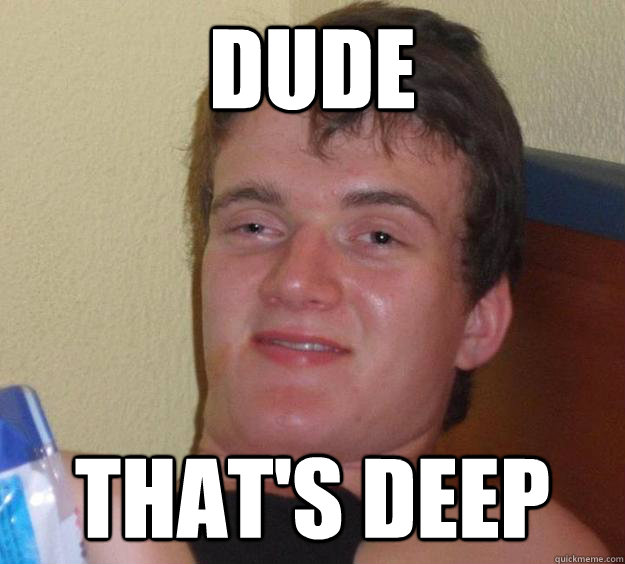
There were many times where I felt the urge to quote the book, but the quote that stuck with me was the one where he talked about everyone being the same, and not discriminating even between good or bad people. That phrase really struck a chord; I had to put the book down and just reflect upon it for a while.


It does occur to me as i write this that there's an ironic nature surrounding all of this. Zorba was a man who believed living by the pen was being a slave to literature, and yet his story was described and recorded in a book which was immortalized. Isn't it strange that Kazantzakis seemed to want to push the point that people who live by the pen cannot fully enjoy what life has to offer them, but he chooses pen and paper as the medium in which to convey the missage? Could this mean that as much as one would enjoy one's own life, if one doesn't live by the pen one cannot ever leave a legacy? Then again, that's probably a fallacy since there will always be people who do live by the pen who would record this stuff for people who do not...


And so goes my train of thought for practically every page of this book. By the end, I've wandered through too many questions without answers, and can only sum up my feelings in a few highly intelligent words:


Have fun reading guys.

SpoilerAlert!

I didn't find the book that compelling, but the widow's death might've killed a little part of me. I had to close the book temporarily because I couldn't stop thinking about how unfair it was. She was essentially murdered because she was too desirable yet unattainable. What kind of people would blame the woman for a man to suiciding over loving her too much? I mean, I know this reasoning isn't in the culture and context of the book (oh god, the WIT essay is really getting to me), but that's pretty obsessive behaviour, and he should've just been glad she didn't apply for a restraining order... Also, when the Boss talked about wrapping her death up until it was just an abstract idea, I was pretty spooked. Isn't that what people do everyday to get over all the dark things that happen in our lives and our society? *shudders*

The ending was also too much. I felt almost obliged to cry, but also too ridiculous to do so since the rest of the book hadn't been that exciting or moving...

Bleh.